
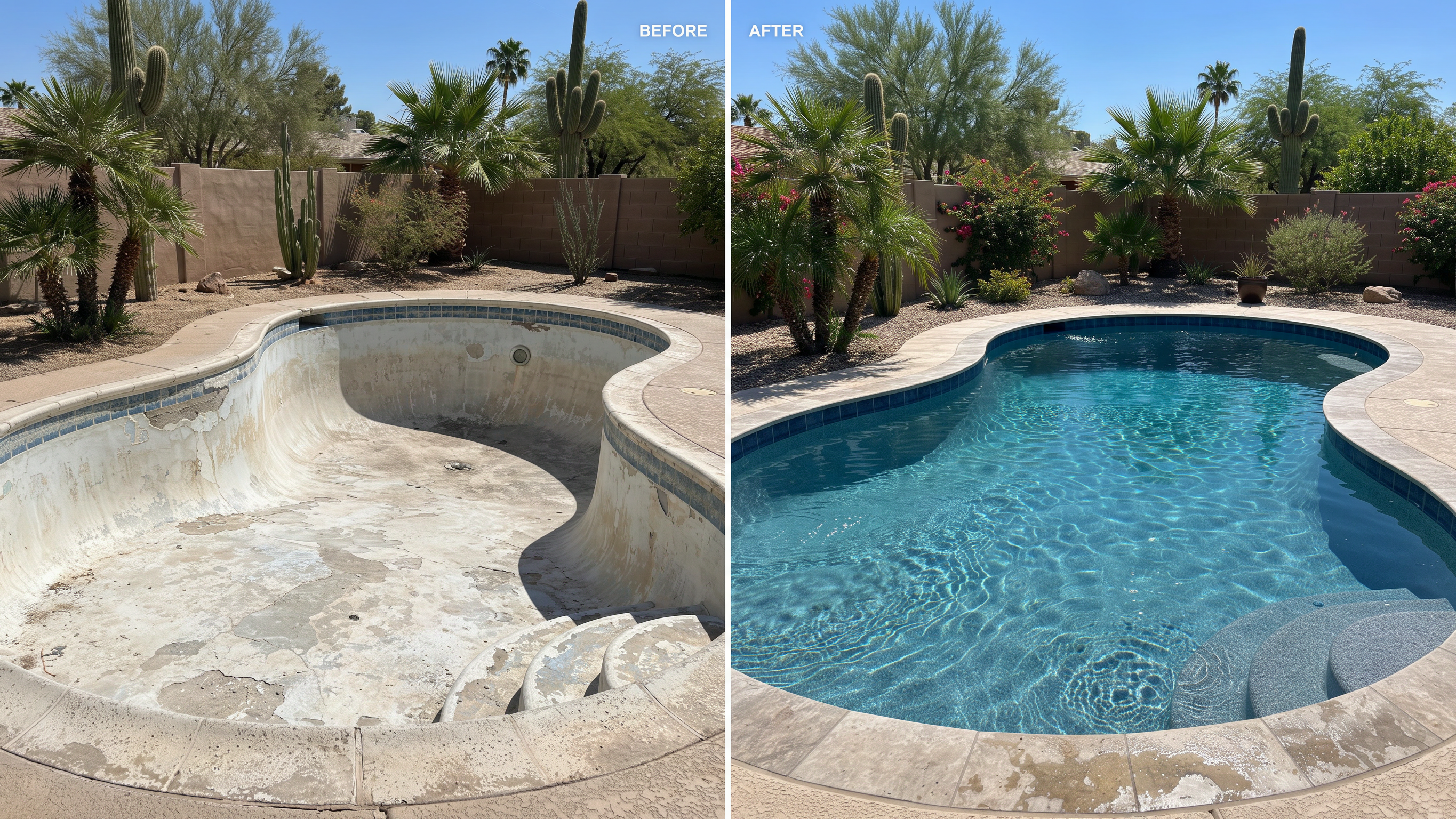
If you’re planning to resurface your swimming pool in Phoenix or Scottsdale, one of the most important decisions you’ll make is choosing the right interior finish.
Two popular options are traditional pool plaster and pebble aggregate finishes, including products such as PebbleTec.
Both can create an attractive swimming pool, but they differ in appearance, texture, cost, and expected durability.
Understanding these differences can help Arizona homeowners make a more informed decision.
What Is Traditional Pool Plaster?
Traditional pool plaster is a cement-based finish commonly made with white cement and marble aggregate.
It has been used in residential swimming pools for decades and remains a familiar option for homeowners.
One of its biggest advantages is its relatively affordable initial installation cost compared with many premium aggregate finishes.
Traditional white plaster also creates a classic, clean appearance.
However, plaster is susceptible to surface deterioration, staining, and changes in texture over time, especially when water chemistry is not properly maintained.
What Is PebbleTec?
PebbleTec is a branded exposed-aggregate pool finish that incorporates small stones into a cementitious surface.
Pebble finishes are available in different colors, textures, and aggregate sizes.
They are popular among homeowners looking for a more decorative appearance and a finish that may provide greater durability than traditional plaster.
It’s important to distinguish the PebbleTec brand from other pebble aggregate products. Different manufacturers offer different finishes, specifications, and warranty terms.
PebbleTec vs. Plaster: Key Differences
Appearance
Traditional plaster typically provides a smooth, classic appearance, particularly in white or light-colored finishes.
Pebble finishes offer more visual texture and a wider range of decorative effects.
The interior finish also influences how the water appears. Depending on the color and lighting, a pool may look light blue, turquoise, or deep blue.
Texture and Comfort
Traditional plaster is generally smoother when properly installed and maintained.
Pebble finishes have a more textured feel because of their exposed aggregate.
Some homeowners appreciate that texture, while others prefer a smoother swimming surface.
Smaller aggregate finishes may feel different from larger pebble finishes, so it’s helpful to compare physical samples.
Durability
Premium aggregate finishes are often selected for their resistance to certain forms of wear.
Traditional plaster can also perform well with proper installation and maintenance, but it may require resurfacing sooner under comparable conditions.
Actual longevity varies significantly based on water chemistry, installation, environmental exposure, and maintenance.
No finish is completely maintenance-free.
Cost
Traditional plaster generally has a lower upfront installation cost.
Pebble finishes typically cost more because of their materials and specialized application.
However, the initial price should not be the only factor.
Homeowners should also consider expected maintenance, durability, appearance, and how long they plan to remain in the home.
Which Finish Is Better for Arizona’s Climate?
Phoenix swimming pools experience prolonged heat, intense sunlight, and seasonal temperature changes.
Both traditional plaster and pebble aggregate finishes can be suitable for Arizona pools when properly installed and maintained.
The most important considerations include the pool’s condition, your budget, desired texture, and your willingness to maintain balanced water chemistry.
Poor water chemistry can damage either finish, regardless of its initial cost.
A professional resurfacing contractor can help you compare materials based on your particular swimming pool.
Does Pool Finish Color Matter?
Absolutely.
A pool’s interior color can significantly influence its appearance.
Lighter finishes tend to create a brighter look, while darker finishes can produce deeper water colors.
However, the final appearance also depends on water depth, sunlight, surrounding landscaping, and other conditions.
For homeowners planning a complete backyard remodel, coordinating the pool finish with waterline tile, coping, and decking can create a more polished result.
Should You Upgrade from Plaster to Pebble?
If your existing plaster is showing signs of deterioration, resurfacing may be a good opportunity to explore an aggregate finish.
A pebble finish may appeal to homeowners who want a more decorative appearance and are comfortable with a higher upfront investment.
Traditional plaster may remain a practical option for homeowners who prefer a classic appearance or want to manage initial costs.
Neither material is automatically the best choice for every pool.
Explore Pool Finish Options with Remodel Your Pool AZ
Choosing the right pool finish is an investment in both the appearance and long-term enjoyment of your backyard.
At Remodel Your Pool AZ, we offer pool replastering and remodeling services, including traditional plaster and decorative aggregate finish options.
Our team can help you compare materials, understand the renovation process, and select an appropriate finish for your swimming pool.
Call 602-549-1021 or visit Remodel Your Pool AZ to discuss your pool resurfacing project.